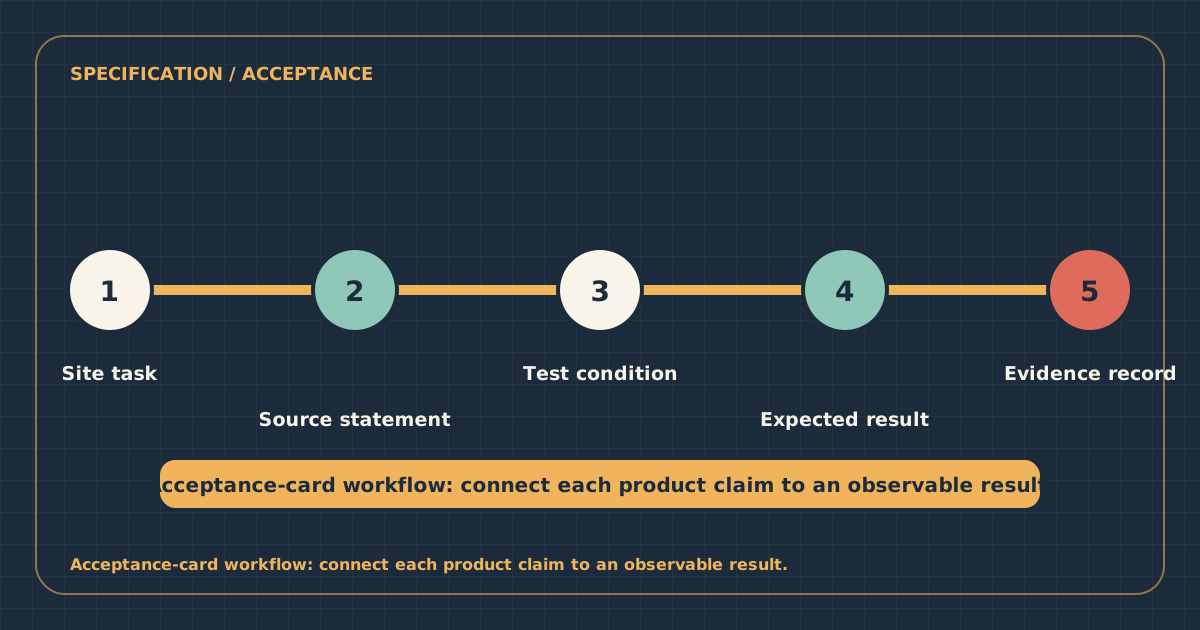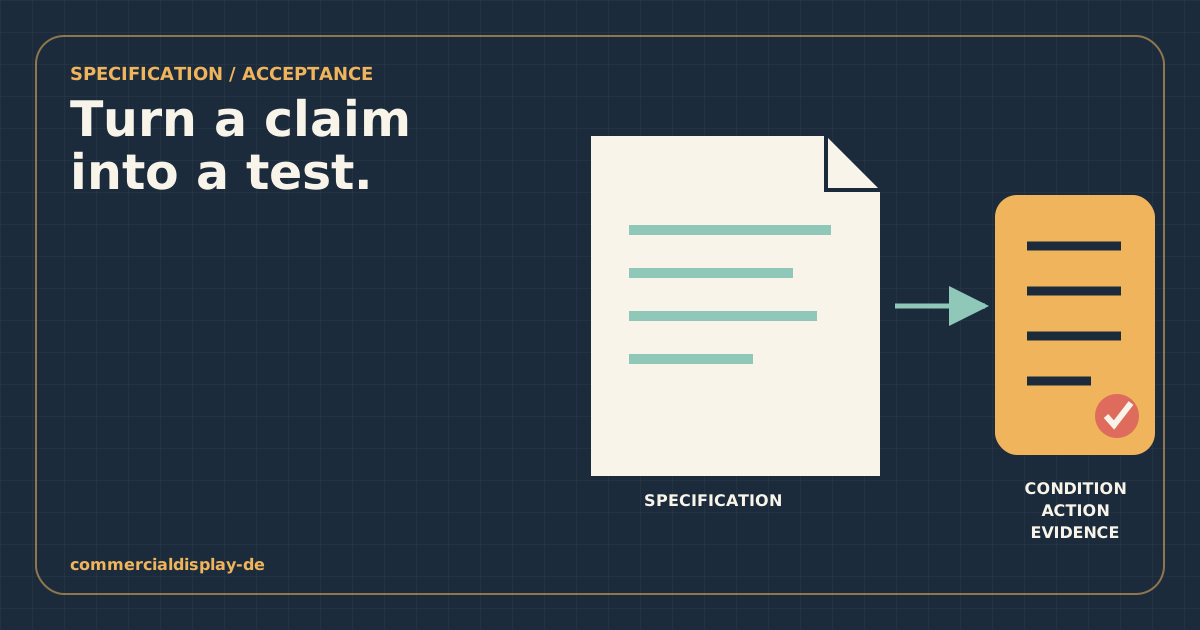
A specification lists properties; acceptance needs observable results. Procurement, engineering, and operations can connect the two by turning each important requirement into a specific test question. A useful question describes the intended use and identifies the evidence that should remain after the check.
Start with the location's task
First write down what the display does at that location. Does it show a daily schedule, present a selected source, or support an operator action? Connect the task to the source, mounting location, and systems involved. The requirement can then be checked within the actual workflow.
Next, record the corresponding statement from the quotation or specification, including the document name, revision, and location of the statement. The tester now has a reference that supplier and customer can both use.
Define the test conditions
Record the conditions under which the result should hold. These may include the agreed source, content file, operating mode, or room configuration. For project-specific numbers, use the approved requirement and record where it came from.
A source-switching test, for example, needs an identifiable starting source, a named destination source, and the agreed operator action. When several operating states matter, give each state a separate test step. This makes the individual results traceable later.
Connect the action, result, and evidence
Write the test as a sequence: the tester takes a defined action and observes a specified result. Add how that result will be recorded. A photograph can document the displayed source; an exported log can record a system message. Choose evidence according to the claim it can actually show.
For source switching, the question might be: “After the named source is selected through the agreed control path, does the intended test content appear on the assigned display?” The test card records the source, destination, control path, expected result, and evidence reference.
Agree on assessment before the appointment
Identify who performs the test and who assesses the result. Define the criteria for passing, corrective work, and retesting. Agree on how deviations will be handled with the people involved before the appointment.
An unresolved question about the measurement method can be tracked as a preparation item with an owner. A deviation observed during testing receives its own entry, with the observed result, evidence, and next action. Preparation and test records remain traceable.
Include the test card in handover
Link the card to the document revision used and the installed configuration. After a change, that connection shows which steps need to be repeated. Keep the original result together with the retest result.
Operations receives the approved test cards, supporting evidence, and a list of items still being followed up. The property first stated in the specification becomes a documented test process that the team can retrieve during later maintenance or changes.